
Walking into a classroom at Williamsburg Montessori School is quite different from walking into a classroom in a traditional school setting. There are no desks, the children are moving freely about the room, and there is no teacher standing at the front giving out instructions. While each of our eight classrooms targets the specific needs of the ages that it serves, there are some common elements:
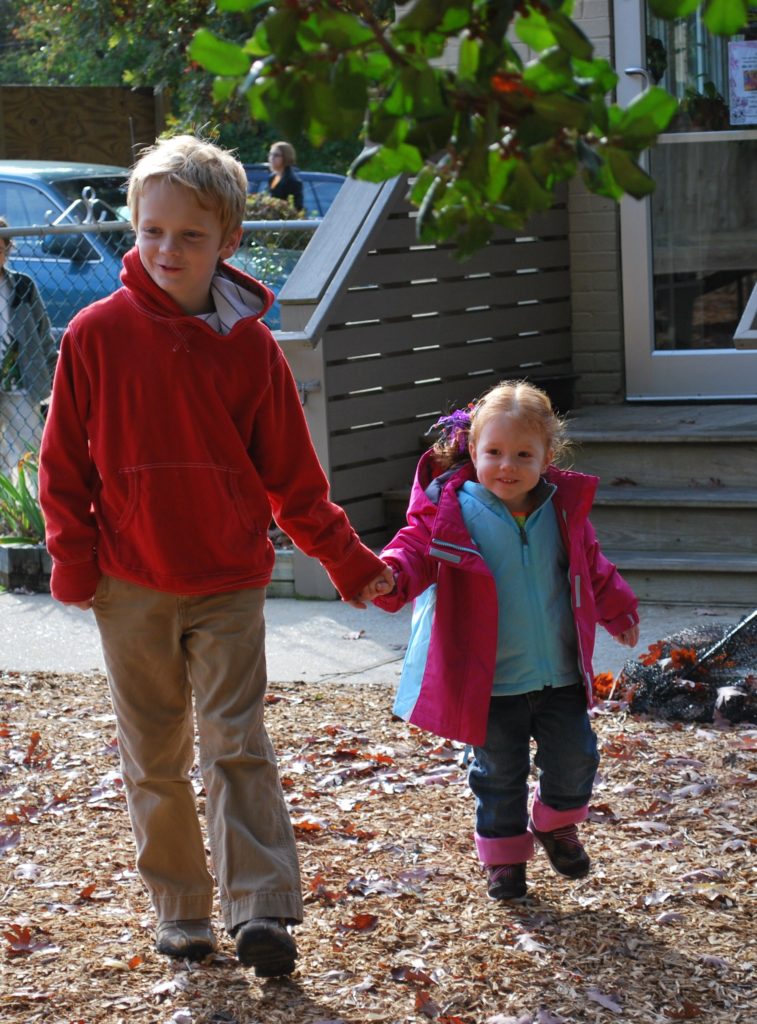
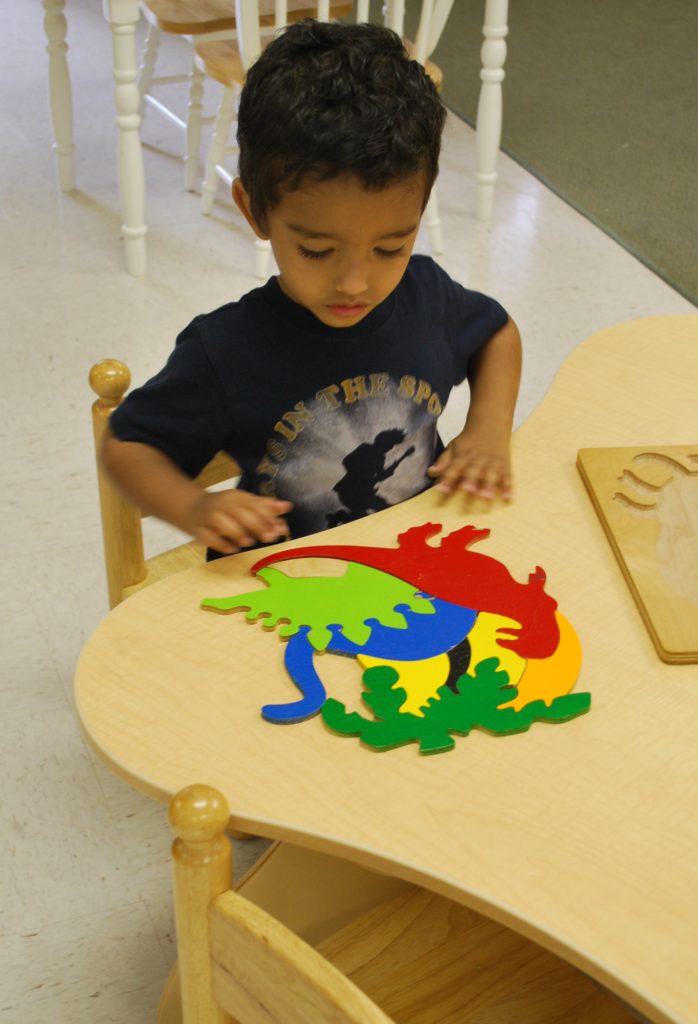
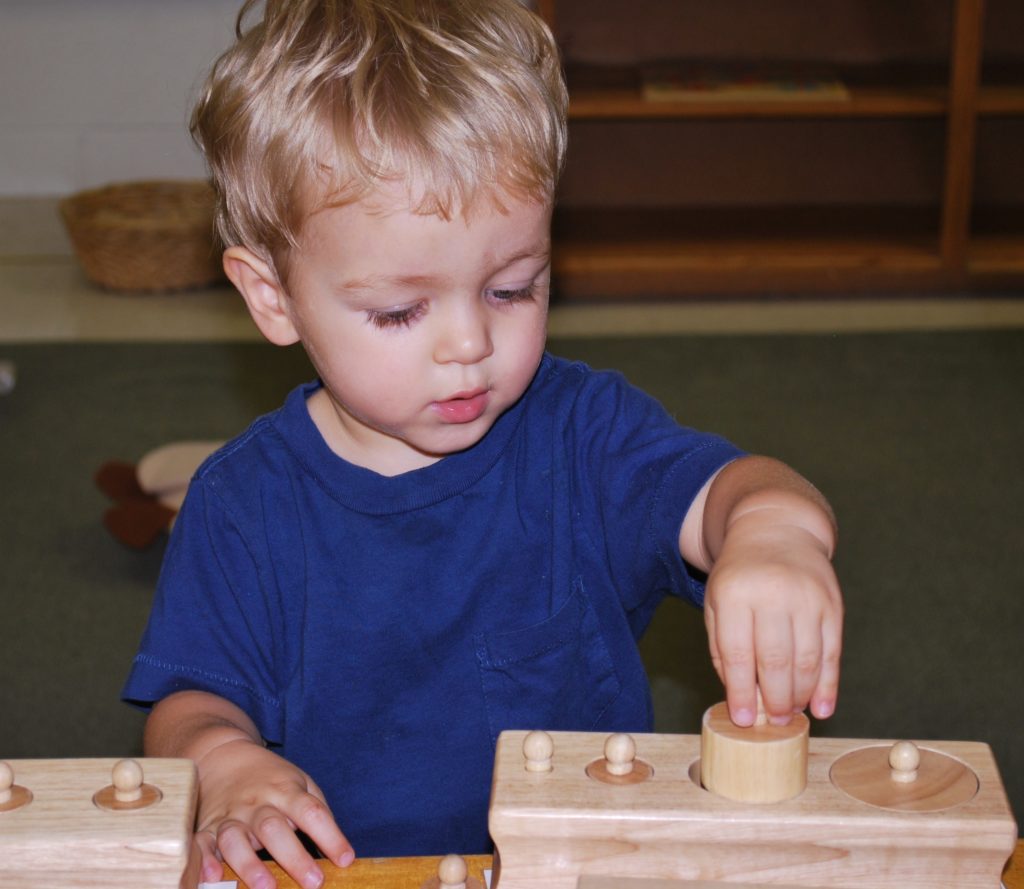
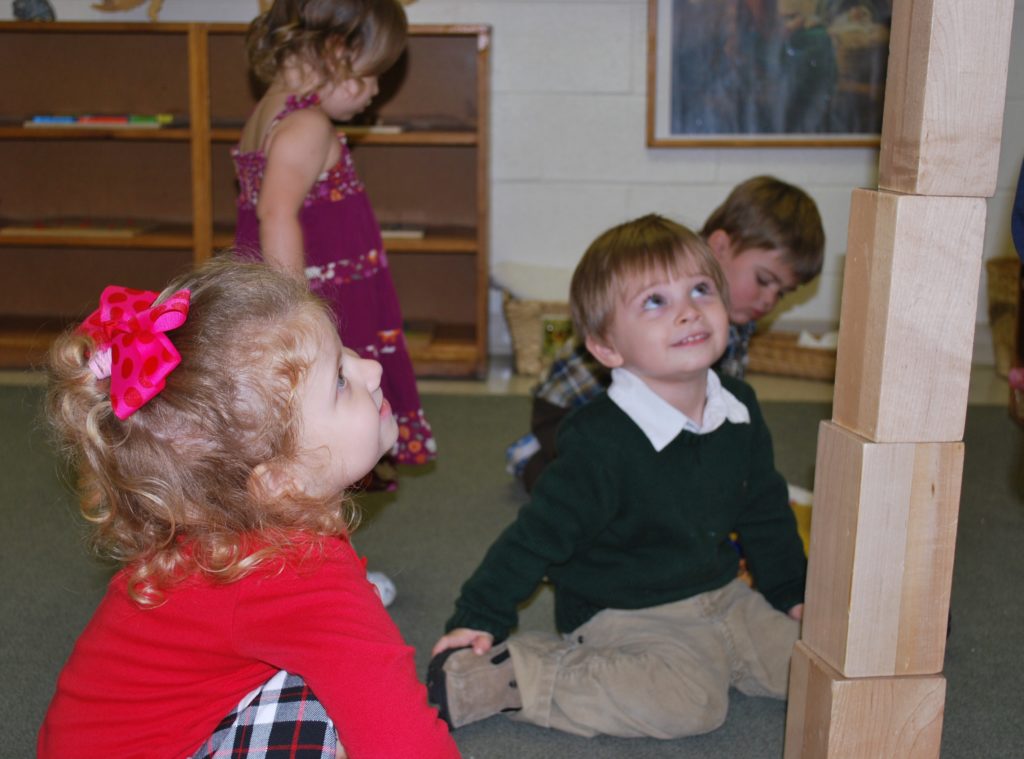
Montessori recognized that even the youngest child has an innate desire to learn and believed that education should begin early so that each child can begin forming his or her identity and begin realizing their unique potential. The WMS Toddler Program allows children ages 18 months to 3 years to develop social skills, emotional growth, physical coordination, and cognitive learning.
Entry into this environment begins gradually, with parent and child coming in together for short periods of time until a foundation of trust is established. This “phasing-in” also supports the parent/child separation process which is a primary task of the toddler period of development. We encourage parents who enroll their children in the WMS Toddler Program to provide a home environment which is consistent with the Montessori philosophy of child development.
The Toddler Curriculum is based on four developmental areas: sensory and perceptual, physical and motor, self-help skills, and social/emotional development.
- Specifically designed materials help children become aware of themselves and the world around them
- Stimulation of the five senses aids cognitive development
- The classroom is safe, nurturing and allows for freedom of movement so that children may explore their surroundings
- Teachers are responsive to children’s needs and adapt their pace to the children
- Activities that encourage small and large muscle movement, fine motor skills, and coordination are part of the daily routine.
- Activities like pouring, opening and closing, scooping and stringing help children develop skills they will use in real life
- The classroom is rich in language. Children are taught to use their words.
- Group activities help children bond with adults and peers by forming friendships and working and playing together
- Toddlers learn to demonstrate empathy for one another and learn the dynamics and expectations of working with others
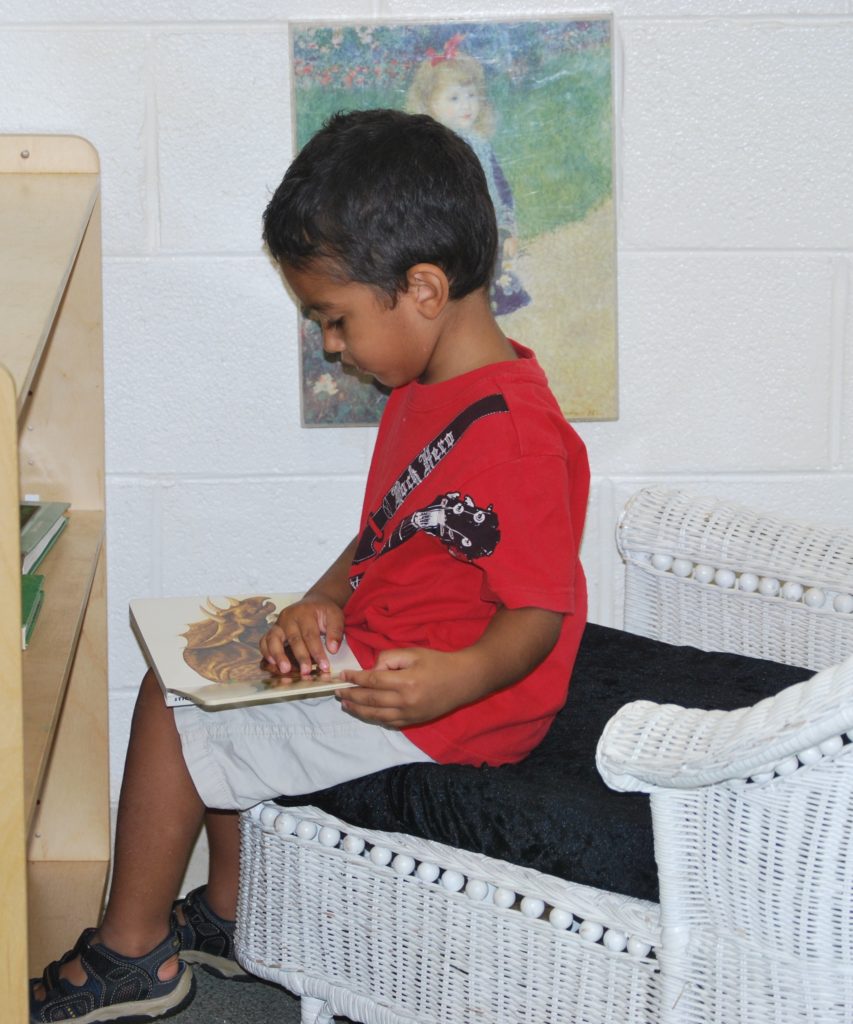
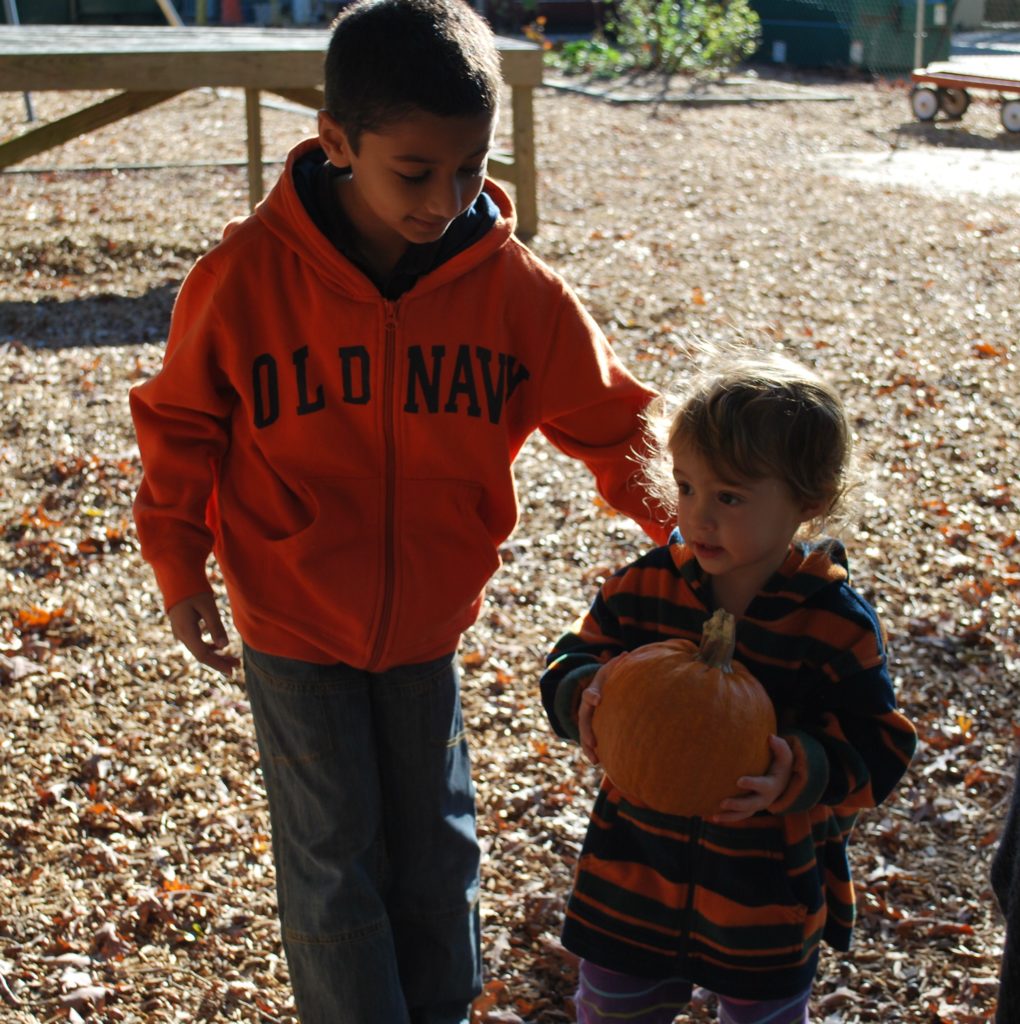
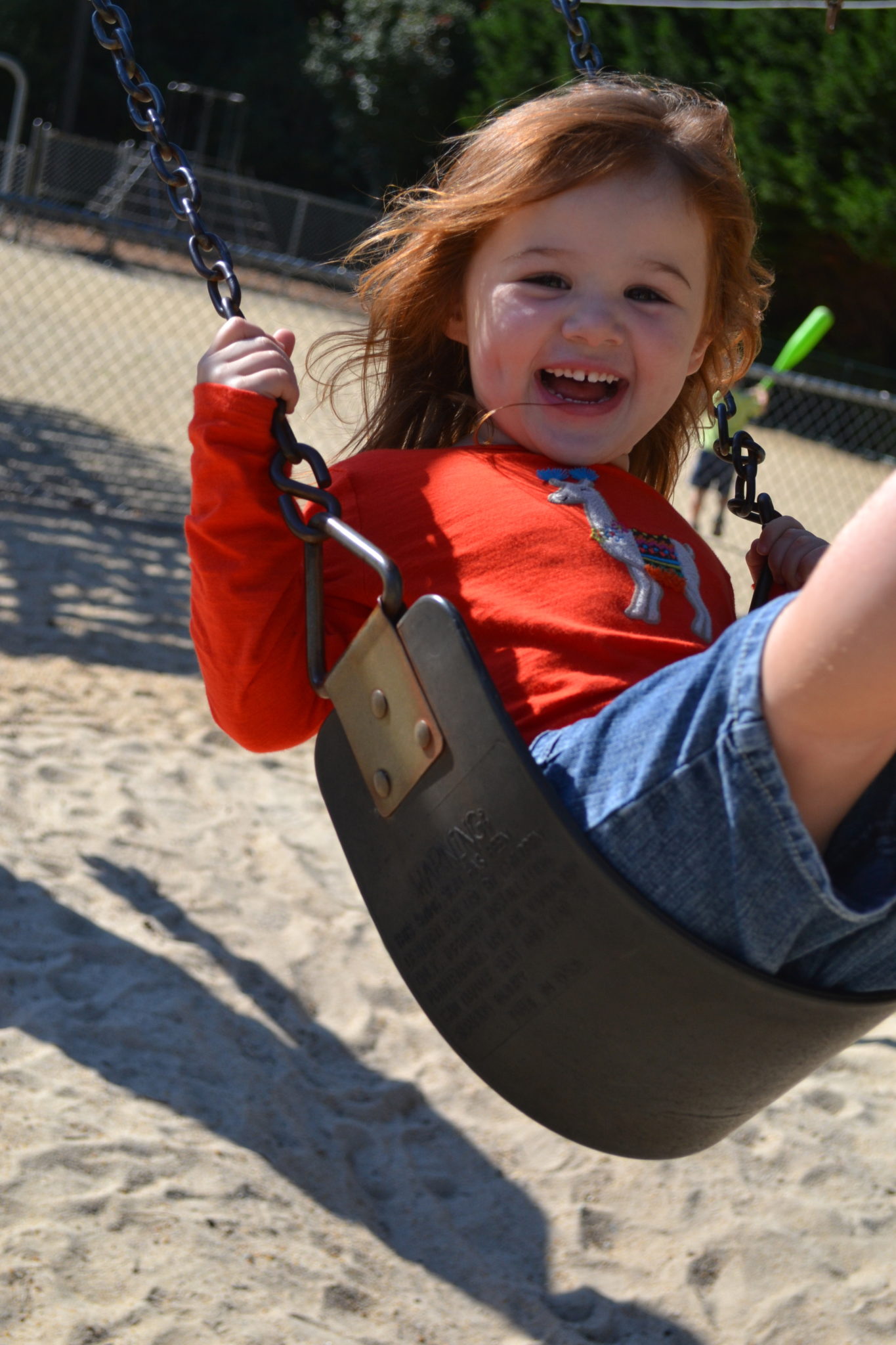
Toddler Program Hours
Full Day: 7:30 a.m. – 5:30 p.m.
Half Day: 8:30 a.m. – 12:00 p.m.
Faculty
- Laura South, Lead Teacher
- Rebecca Riggleman, Assistant
- Julie Ambrose, Assistant
Lunch/Snacks
A hot lunch is served daily, including a vegetarian option. Morning and afternoon snacks are also provided.
Naptime
- 12:30 – 2:30 p.m. (approx.)
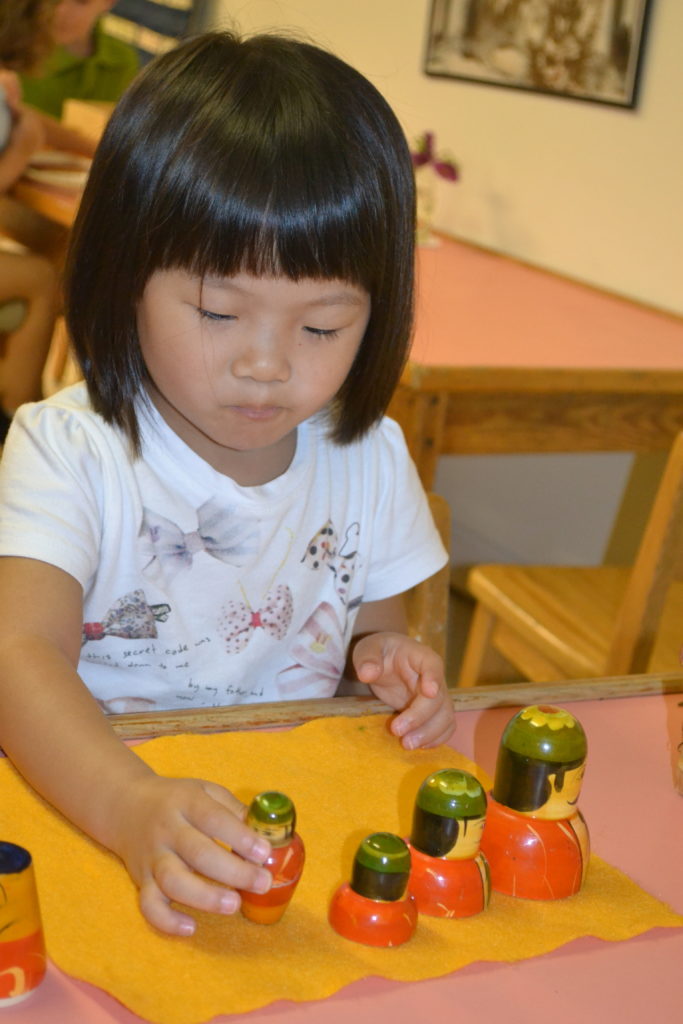
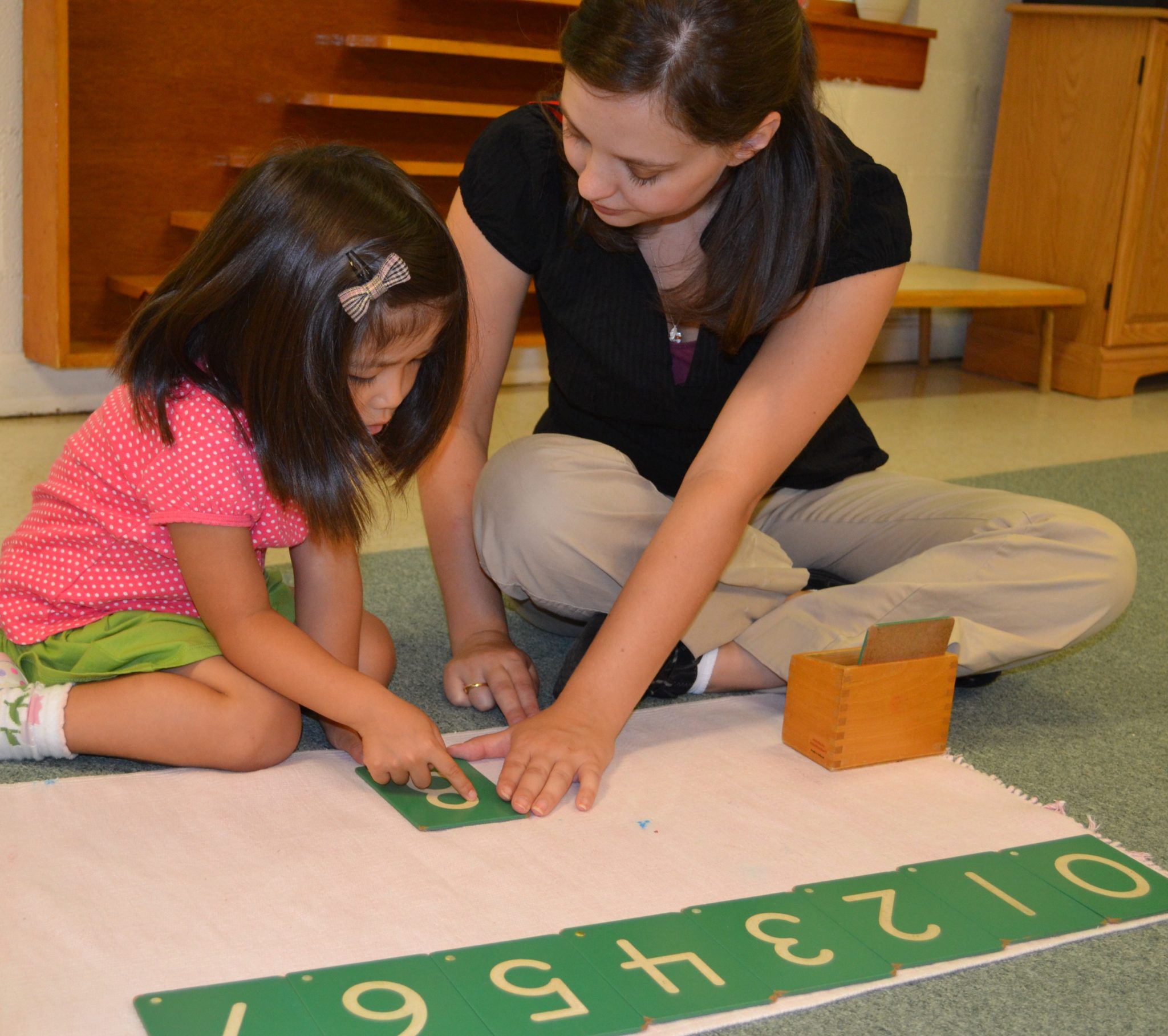
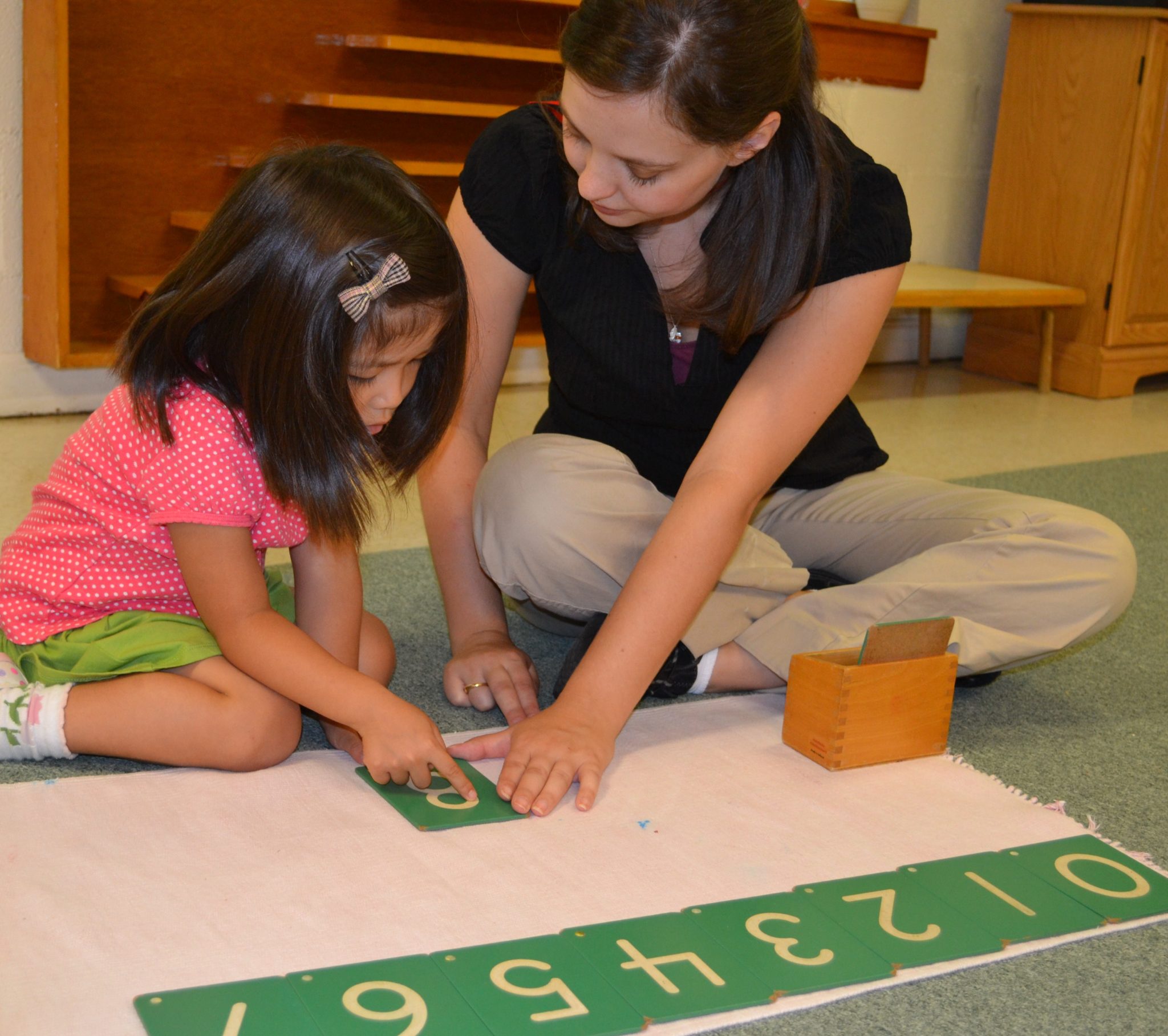
The Children’s House or preschool program is for children between the ages of three to six who are going through an intense period of cognitive, social, and physical change. All of the lessons and materials are designed so that children learn in the best possible way – by doing. It is a special kind of doing, carefully directed within a beautifully “prepared environment” that calls to the child’s inherent desire to learn. The concrete materials allow children to explore the world through all their senses, and to develop the capacities that set the stage for all future learning: concentration, coordination, order, and independence.
Children in their third year of Children’s House, or kindergarten year, have a special role. As the leaders in the class they help younger students, assume more responsibilities and experience the real world through field trips into the community. They also receive an additional period of afternoon lessons that focus on academics while the younger students nap.
Carefully trained adults respond to the needs of the children with appropriate lessons to support each child’s growth and emerging capabilities. The curriculum in the Children’s House is made up of Practical Life, mathematics, language, Sensorial and cultural studies.
- Children develop concentration, coordination, order, independence and self-help skills
- Children are introduced to sequenced activities that can then be freely chosen and repeated as needed or desired.
- Younger children participate in Practical Life activities because they love it. Older children focus on accomplishing a goal.
- By independently practicing tasks that have a clear beginning, middle, and ending, children internalize the concepts of sequenced learning in order to develop the ability to concentrate – preparation for school and life.
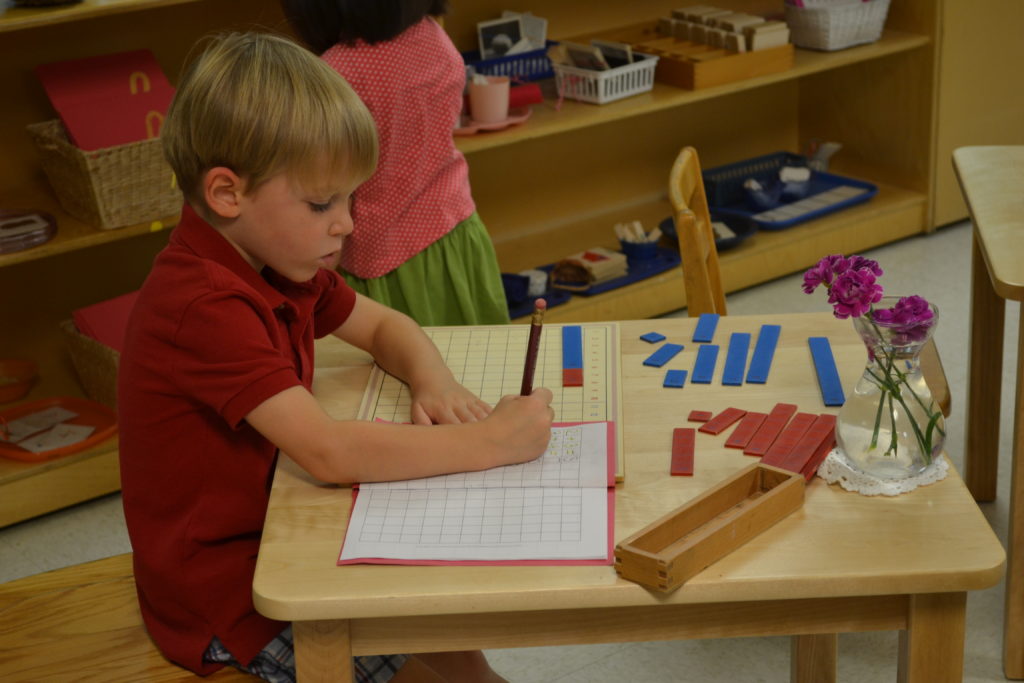
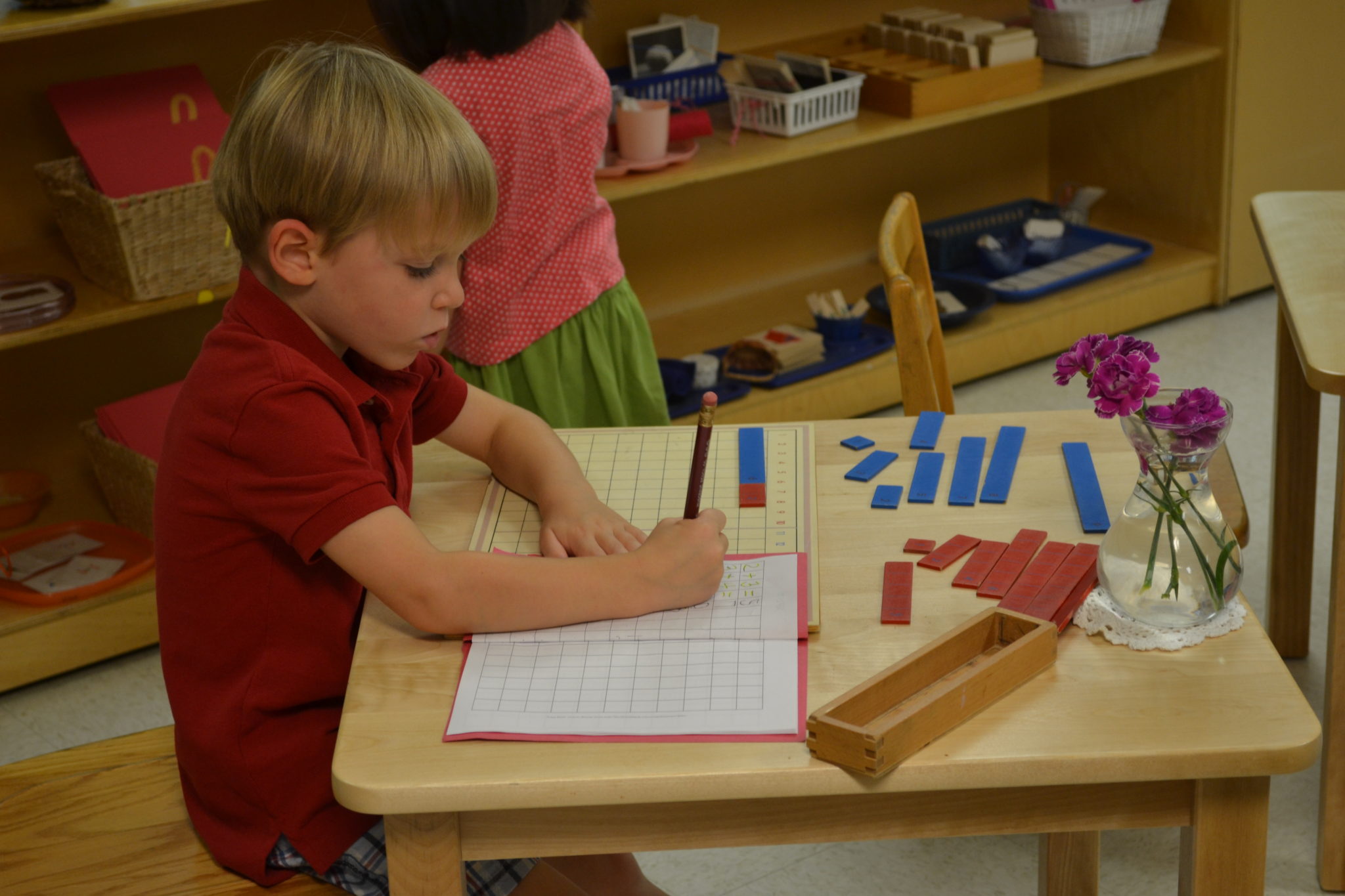
- Organized in six groups: Numbers to Ten, the Decimal System, Teens and Tens, Memory Work (addition, subtraction, multiplication, and division), Passage to Abstraction, and Fractions.
- Beautiful concrete materials introduce the initial concept and then allow for continued experience and repetition with variety, so concepts can be mastered, expanded, applied, and revised.
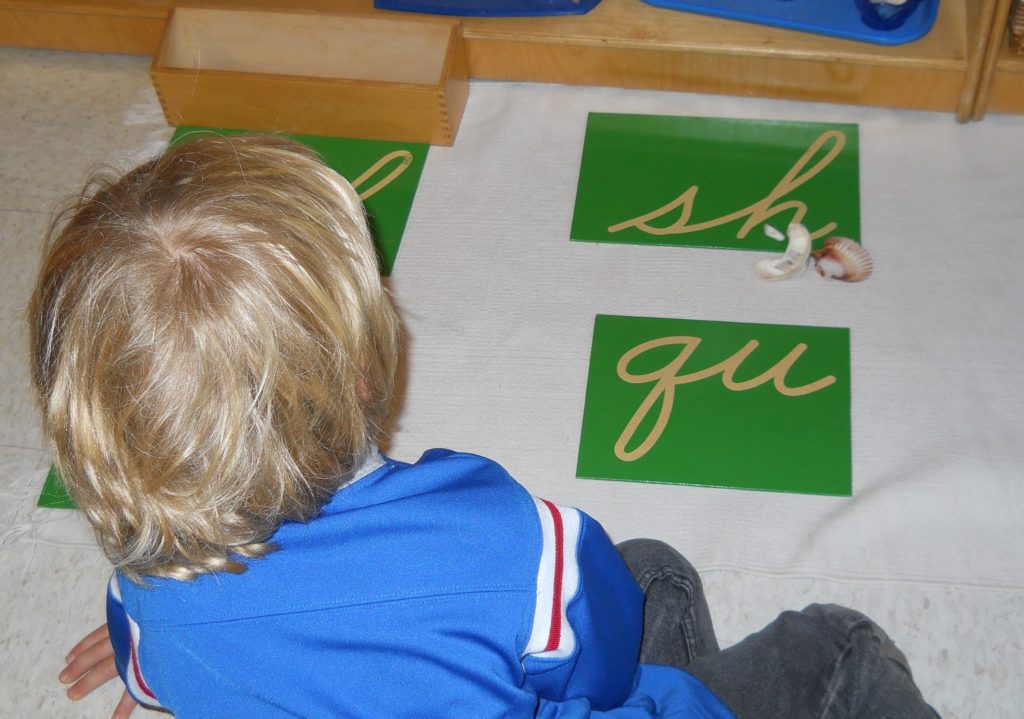
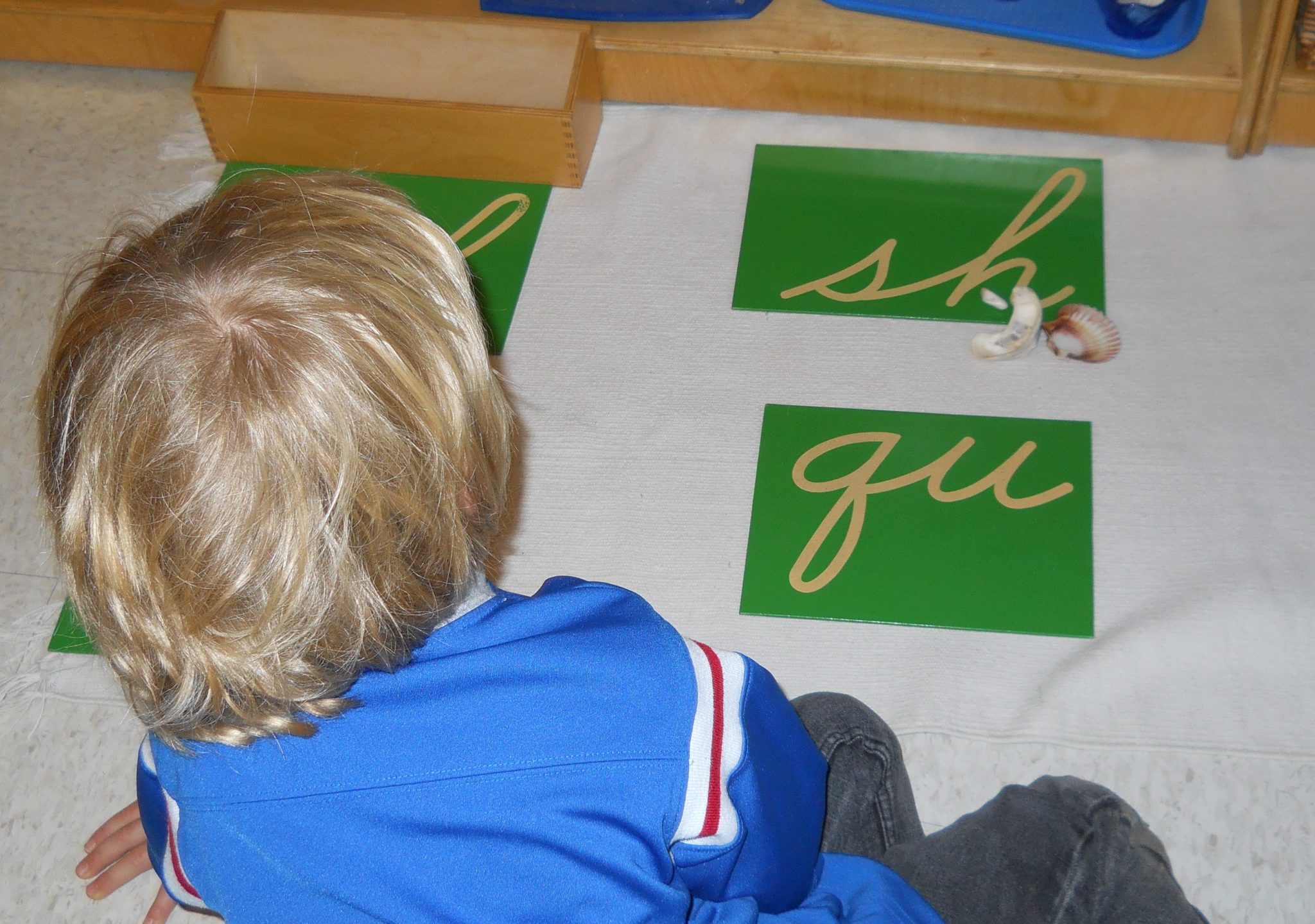
- The environment is rich with opportunities to associate sound, symbol, and meaning
- Children begin exploring language with sounds, which provides a basis in phonetics
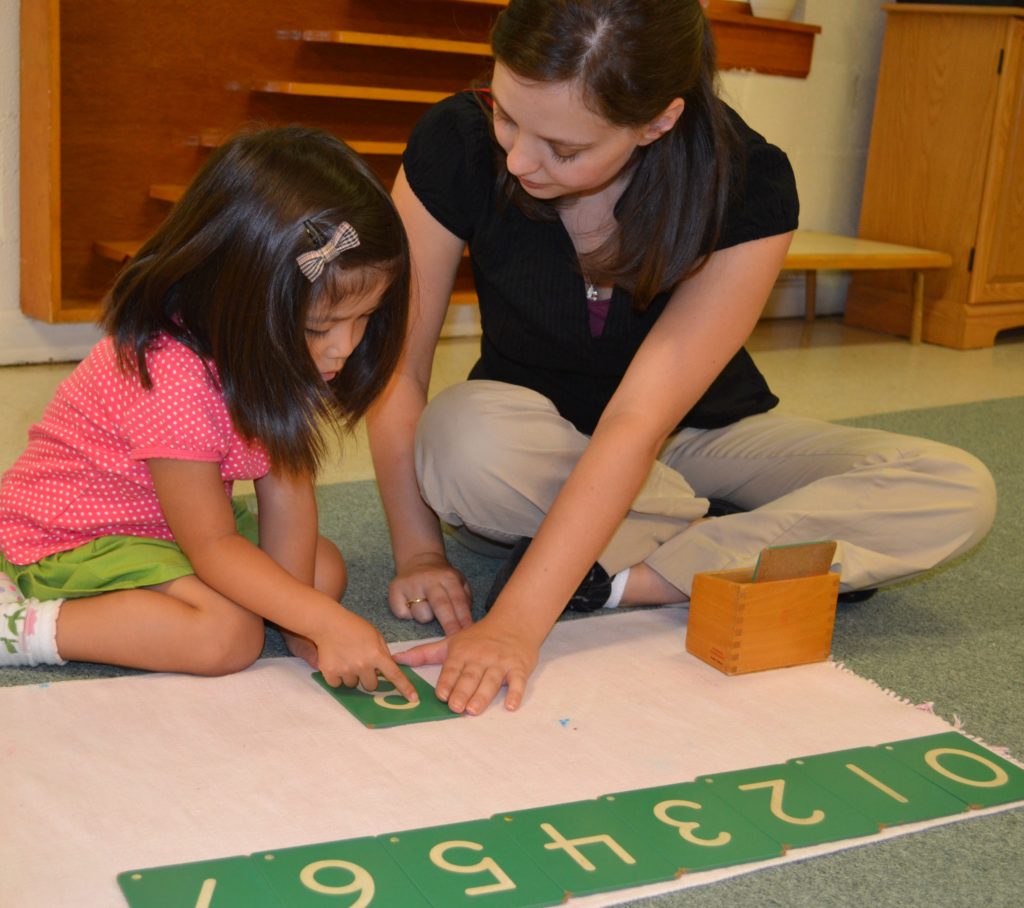
- Children progress as they associate sound with touch and symbol, as they put sounds together to create words, and then “explode” into reading – all while using carefully crafted materials
- Writing activities range from learning one’s name to stories and reports for older students
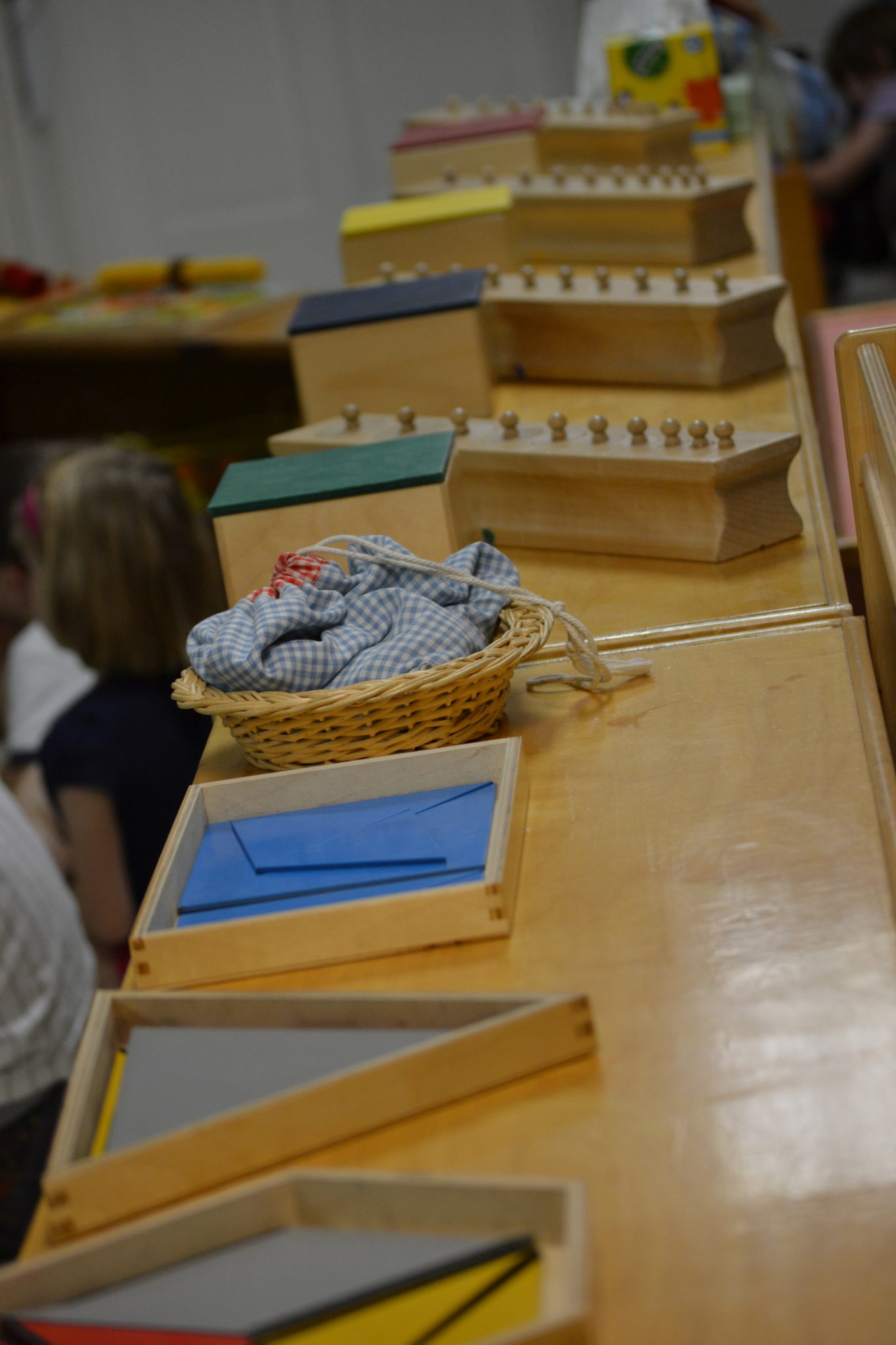
- Materials isolate concepts such as size, form, weight, and volume, eventually internalizing the abstract concept each represents
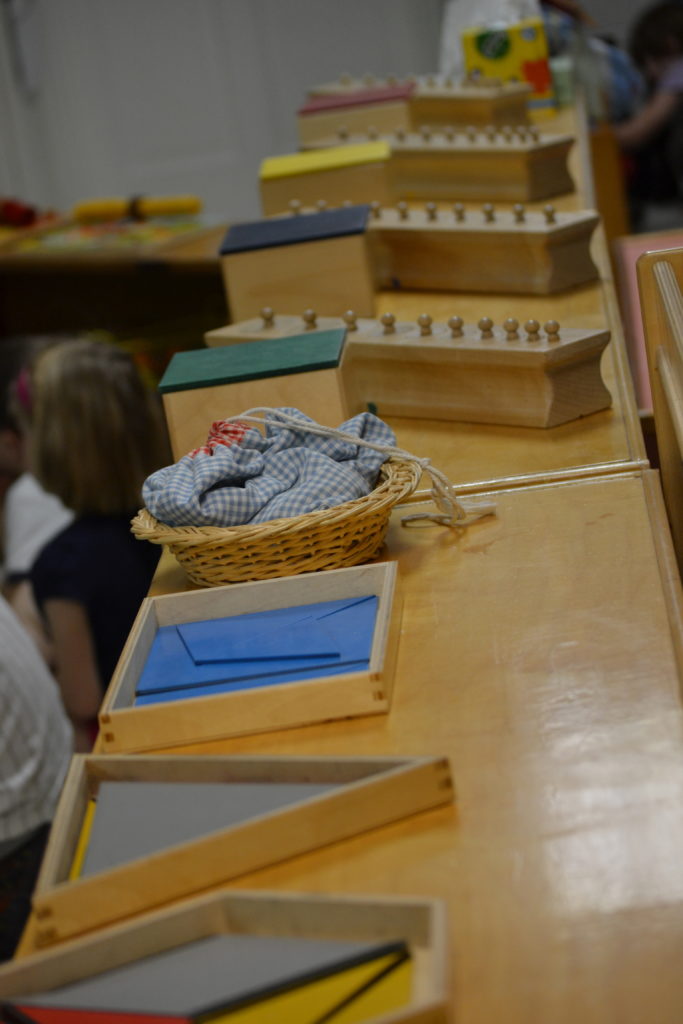
- Beautifully constructed, meticulously presented, and carefully sequenced, the sensorial curriculum appeals to the child’s need to experience the world through all the senses
- Unlimited opportunities for deep concentration and the satisfaction that comes with mastery
- Direct preparation for the math curriculum
- Cultural studies encompass geography, history, world cultures, botany, and biology.
- Answers the “How?” and “Why?” questions that are at the forefront of young minds
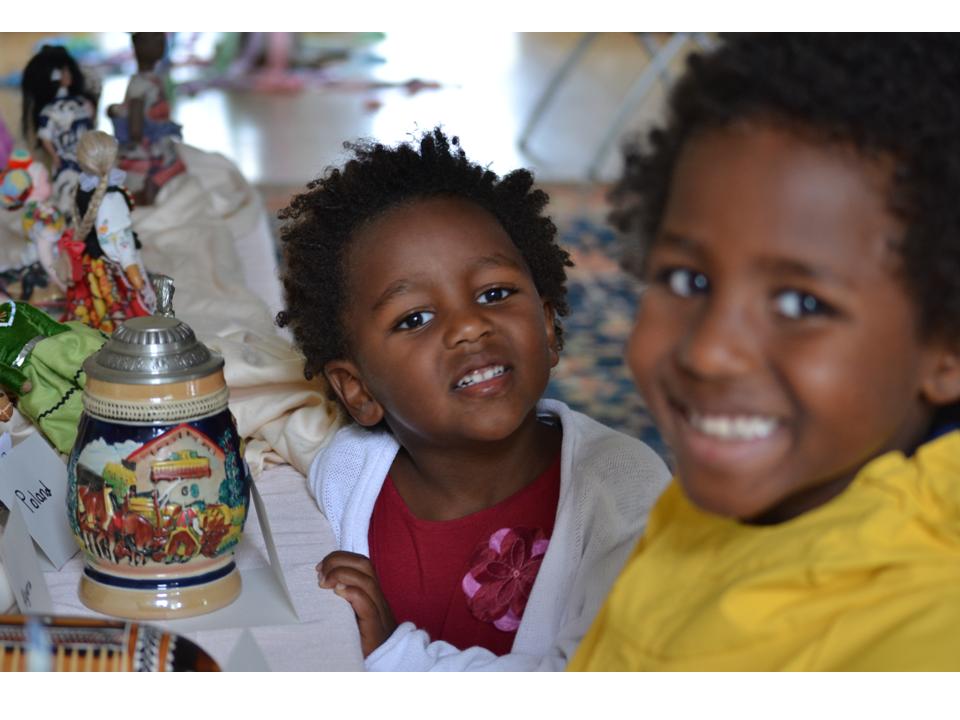
- Takes advantage of a diverse family community, country studies are drawn from the traditions of families in the class
- Encourages respect for their own traditions and beliefs and those of others
- Provides opportunities in art, music, cooking, dancing, and much more
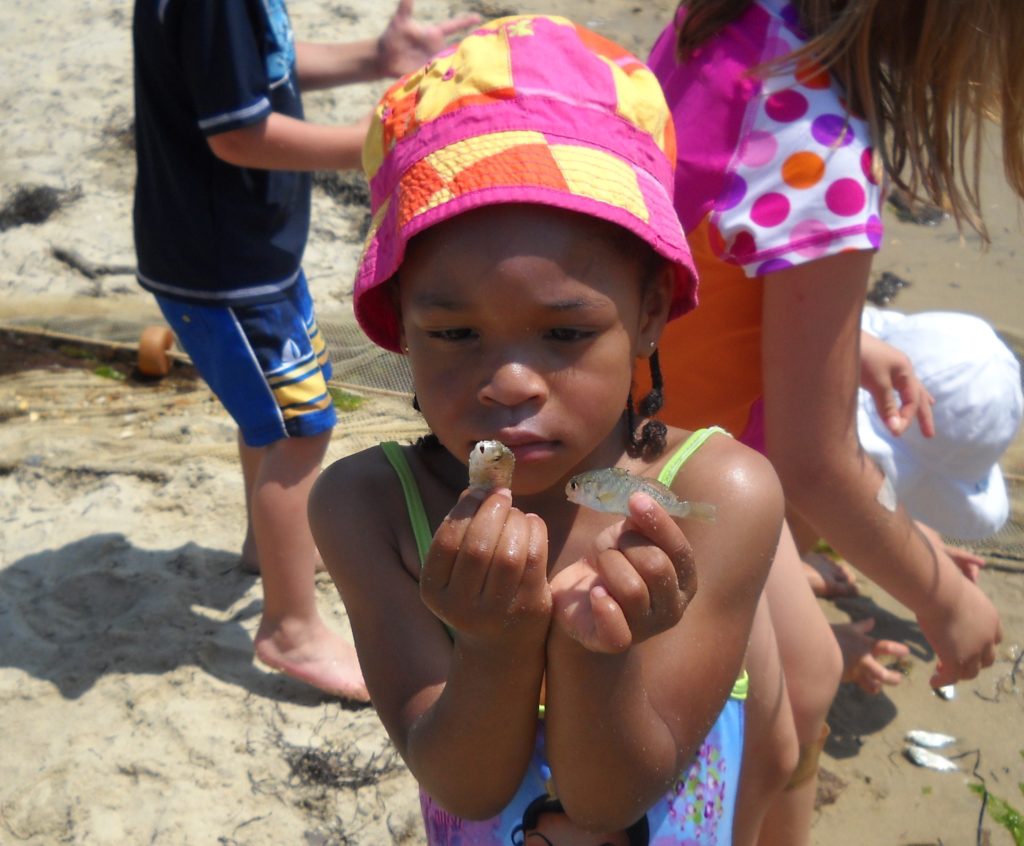
Children’s House Program Hours
Half Day – 8:30 a.m. – 11:45 a.m.
Full Day – 8:30 a.m. – 3 p.m.
Before-care – 7:30 a.m. – 8:30 a.m.
After-care – 3 p.m. – 5:30 p.m.
Faculty
- Angela Tambone, CH1 Lead Teacher
- Kirsten Newborg, CH1 Assistant
- Sinuda Kapalczynski, CH2 Lead Teacher
- Vickie Hook, CH2 Assistant
- Beverlee Mendoza, CH3 Lead Teacher
- Charlotte Morton, CH3 Assistant
Lunch/Snacks
A hot lunch is served daily, including a vegetarian option. Morning and afternoon snacks are also provided.
Naptime
1 p.m. – 2:30 p.m. (approx.)
Volunteer Classroom Liaisons
CH1 – Lucia Liptakova
CH2 – Liz Sykes
CH3 – Diana McSpadden
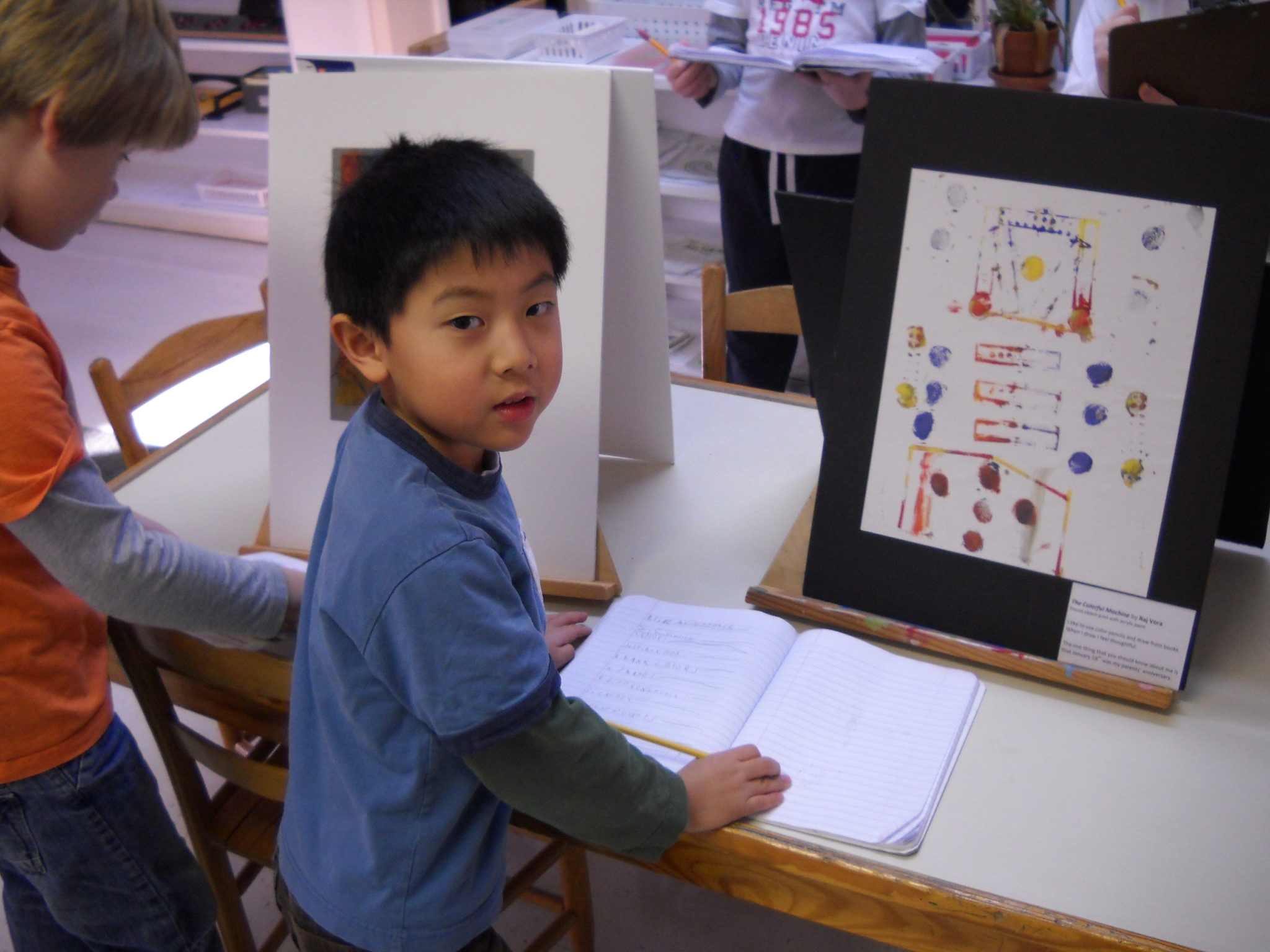
The Lower Elementary is based on the unique needs of children between the ages of six and nine. WMS offers students the intellectual, social, and spiritual tools they need to flourish not just in school, but in life beyond school. The curriculum is both broad and deep, fully integrating rigorous academic study with practical work in an atmosphere that fosters social, emotional and intellectual development.
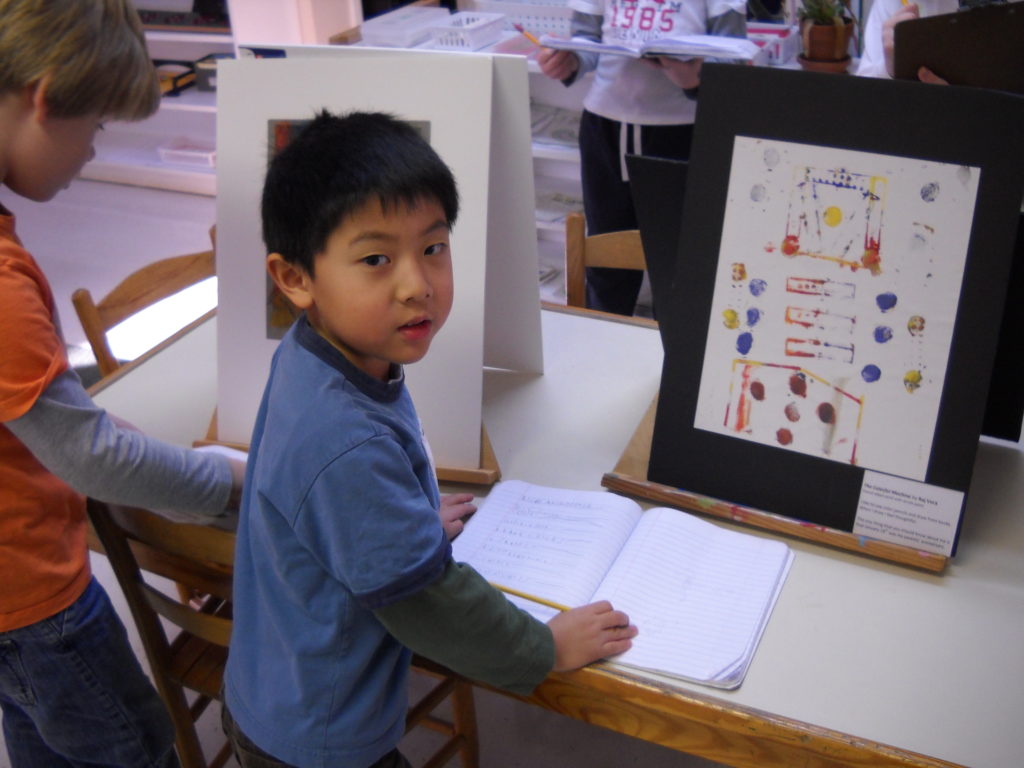
Children entering the elementary years combine vigorous stamina and curiosity with the excitement that comes with mastering the basics of reading and writing, time management, independent work, and harmonious community life. Children spend their days working both individually and collaboratively on a variety of highly engaging projects in the core subject areas of math, language, cultural studies (geography, history, sciences), and practical life. Highly skilled teachers customize research activity, field study, and art and music instruction based on a balance of student interest and the core goals of the curriculum.
- Students gain a concrete understanding of concepts through materials, then move on to abstraction
- Individualized studies allow students to learn at their level – moving ahead when they are ready
- Math studies include: number sense, fact memorization, math operations, word problems, fractions, geometry, measurements, time and money
- Children acquire a mathematical vocabulary to identify the operations with which they are familiar as well as those they are just learning
- Emphasis is placed on accuracy in computations and on the memorization of number facts
- Children work to understand the interrelationship of number operations and to differentiate mathematical concepts
- Elementary children use language to explore their imaginations, to aid their research about the natural world, and to develop communication skills with friends and teachers
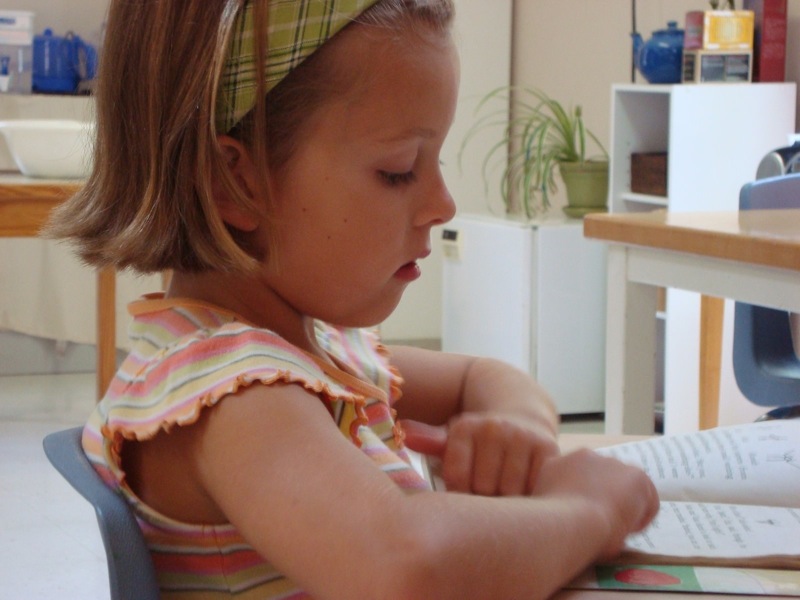
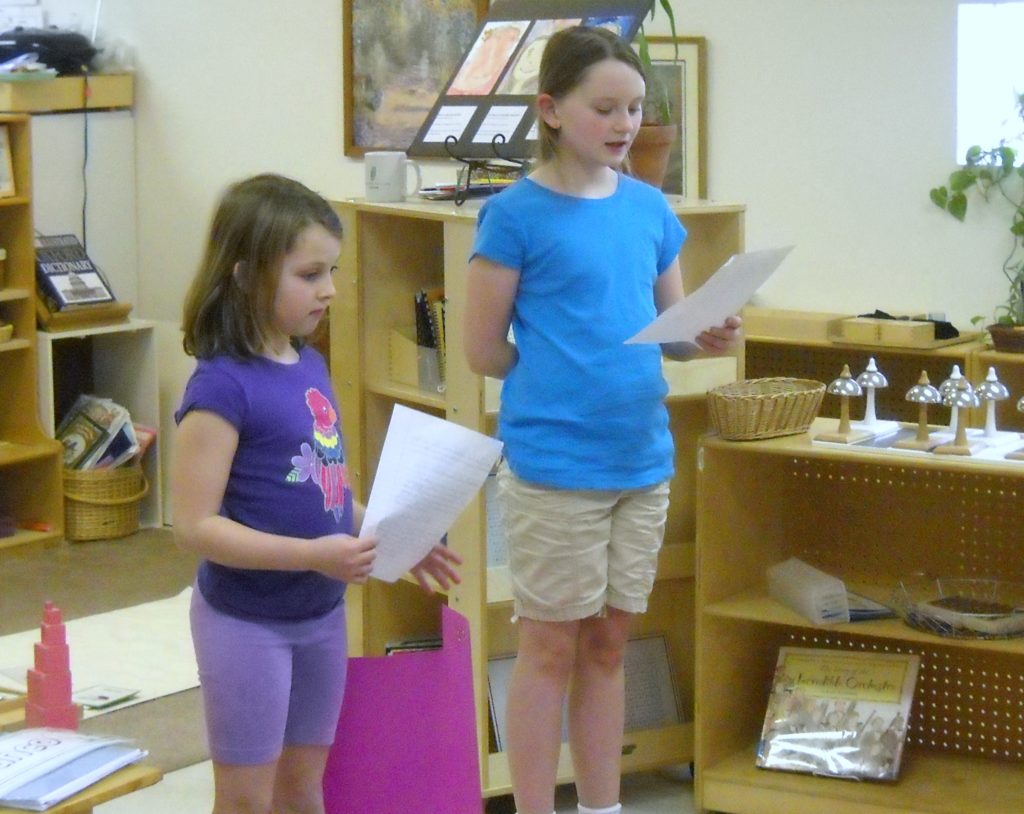
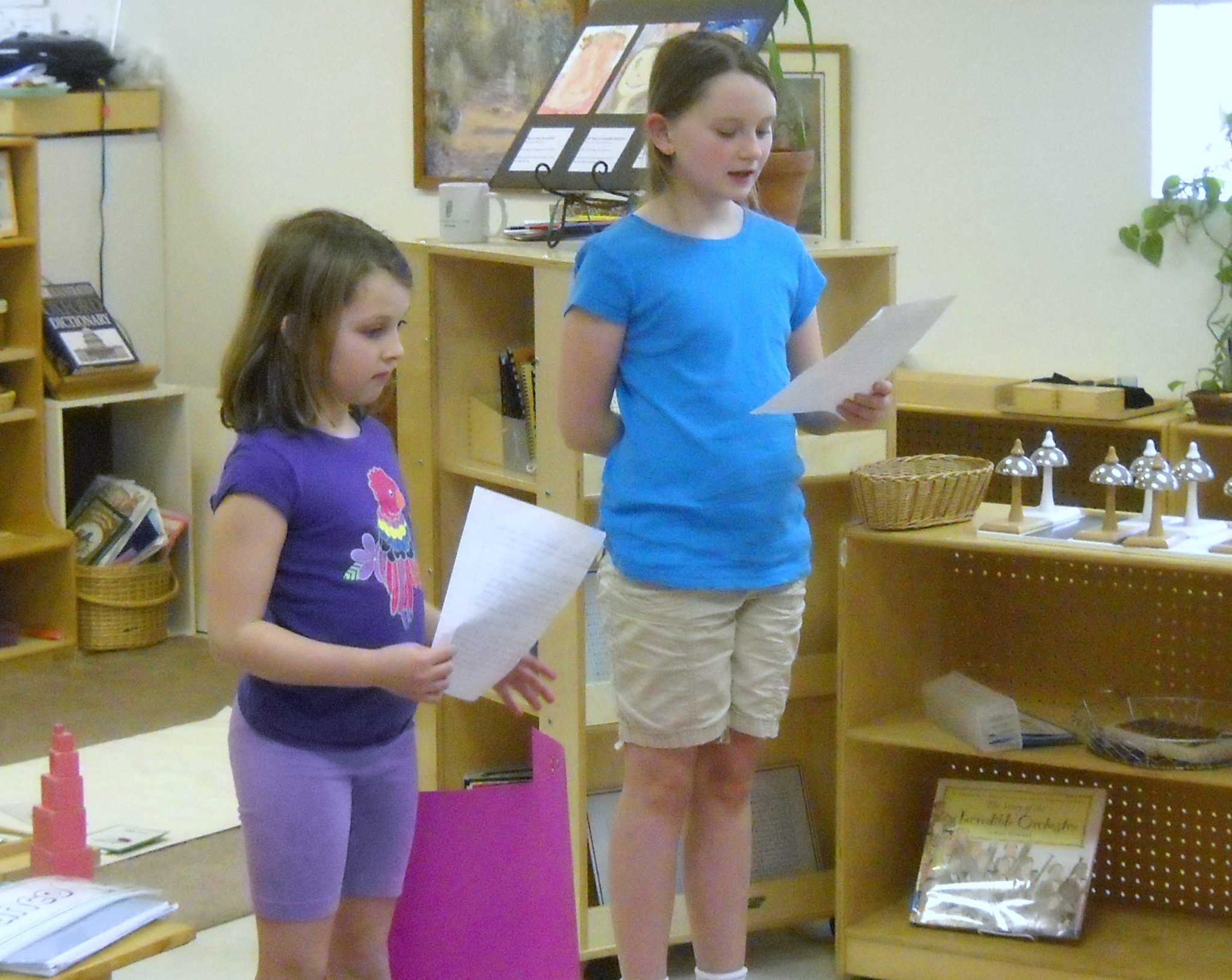
- Language studies include: encoding and decoding skills, reading comprehension, novel study, word study, grammar, sentence analysis, spelling, composition, poetry, drama, and public speaking
- Ample opportunities for research build a solid foundation in problem solving, innovation and communication skills and allow students to pursue their interests
- Requires students to think critically and analytically about the world and their place in it
- Appeals to the imagination and intense curiosity of the elementary student
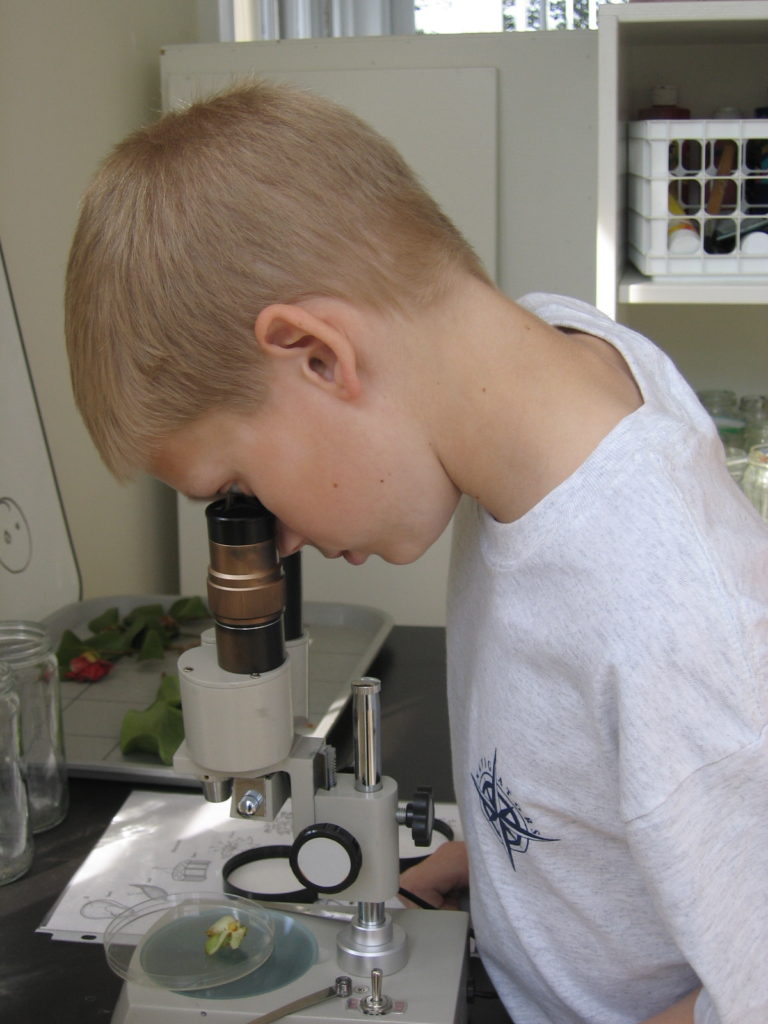
- Cultural studies include: history, geography, world cultures, biology, botany, physical laws, the interdependence of life and the scientific method
- Builds on the child’s natural interest in peer relationships and in the world around him
- Students share responsibility for maintaining their school environment, from weeding outdoor gardens to caring for classroom animals to planning special projects.
- Lessons in assertive communication and opportunities to work with one another allow students to become effective problem solvers and team members
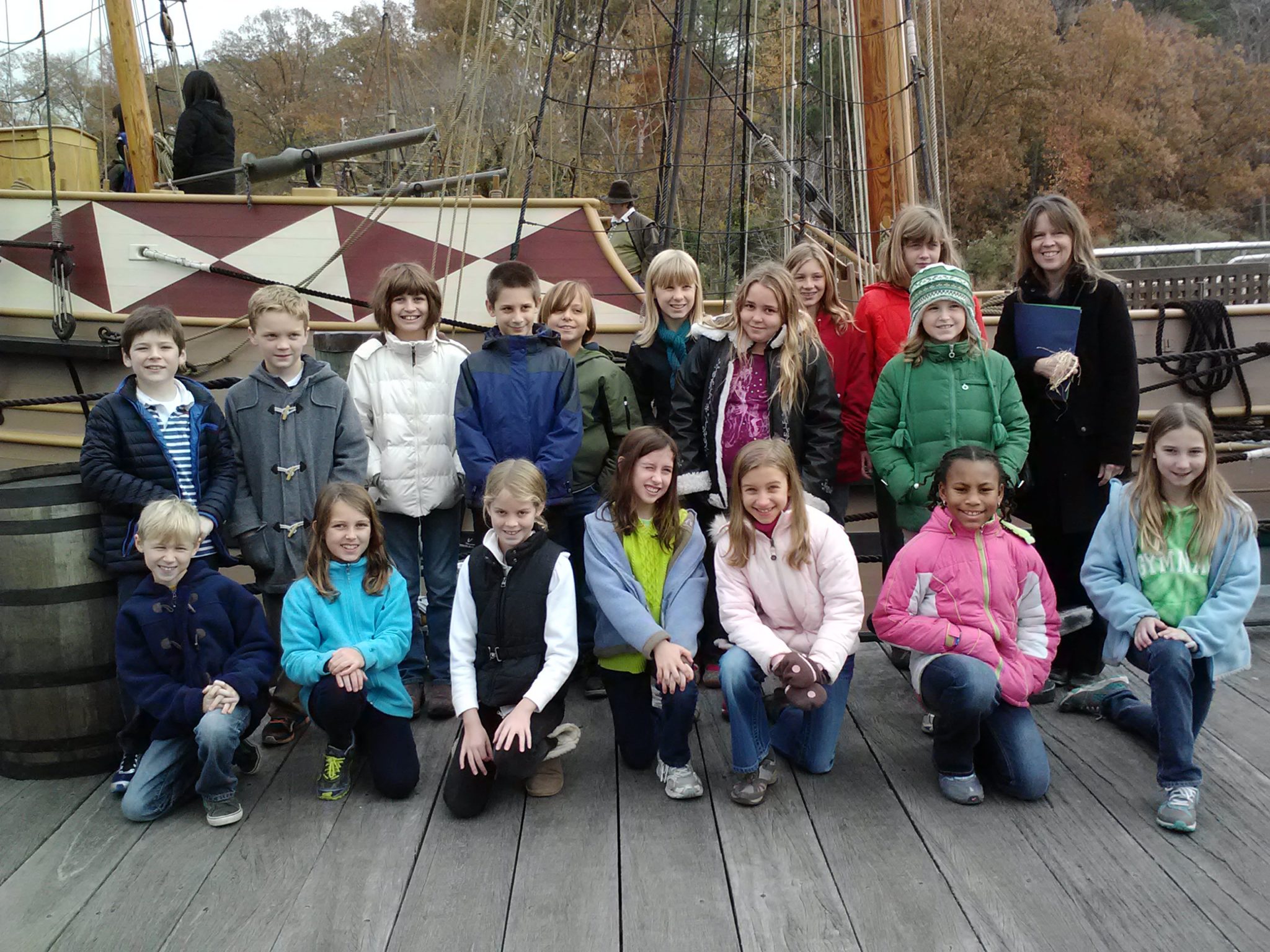
- The “Going Out” program encourages students to plan small field studies to support individual or small-group research projects
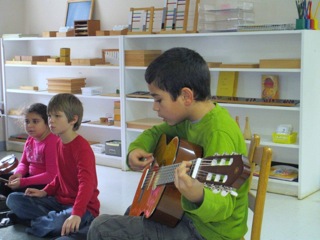
- Students have weekly lessons with specialty teachers in music, art, physical education, and Spanish are offered in the afternoons.
- Classroom plays and presentations and an annual Spring Concert give students an opportunity to perform
Lower Elementary Program Hours
Full Day – 8:30 a.m. – 3:00 p.m.
Before-care – 7:30 a.m. – 8:30 a.m.
After-care – 3:00 p.m. – 5:30 p.m.
Faculty
- Nicole Ellis, Co-Teacher
- Lauri Wawersik, Co-Teacher
- Mary Myer, LE Assistant, Art
Lunch/Snacks
Students bring their own nutritious lunch. Morning and afternoon snacks are provided.
Volunteer Classroom Liaisons
Michelle Perry
Video
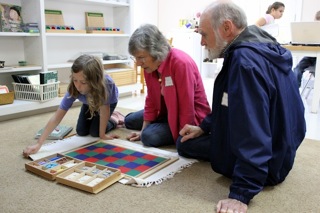
A Lesson in Montessori Multiplication – Keeping it visual makes math concepts easy to understand.
The Upper Elementary student is continually moving into more abstract thinking. They weigh options, examine contradictory evidence, tolerate differences of opinion, and make connections among different learning concepts and personal experience. They are avid consumers of knowledge and deliberate critics of logic. They love to work in groups but also need to work privately.
The WMS Upper Elementary Curriculum balances rigorous skill development with constant opportunity for self-expression, exploration, and support from carefully trained adults. The values of independence, cooperation, and self-discipline are emphasized. The abilities to concentrate fully, to think critically, and to work productively – both individually and as a part of a peaceful, cohesive community – are goals of the Upper Elementary program.
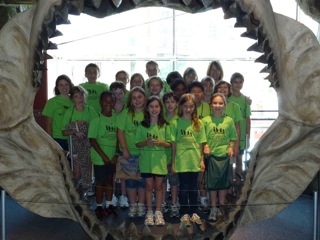
Our beautiful facility, located at our satellite campus in downtown Williamsburg, offers a dynamic learning environment, where endless opportunities for a scholarship are literally waiting just outside the door.
- Increasingly capable of abstract thought, students become less dependent on materials as they broaden and deepen their working knowledge of hierarchies, numerical operations, and geometry
- Students extend and apply acquired skills, exploring preliminary concepts of algebra
- Students eagerly observe mathematical properties and functions in the world around them and apply new concepts to studies in other areas, such as science and culture
- Mathematics studies include: operations with whole, decimal and negative numbers; fractions, percentages, squaring, cubing and number bases
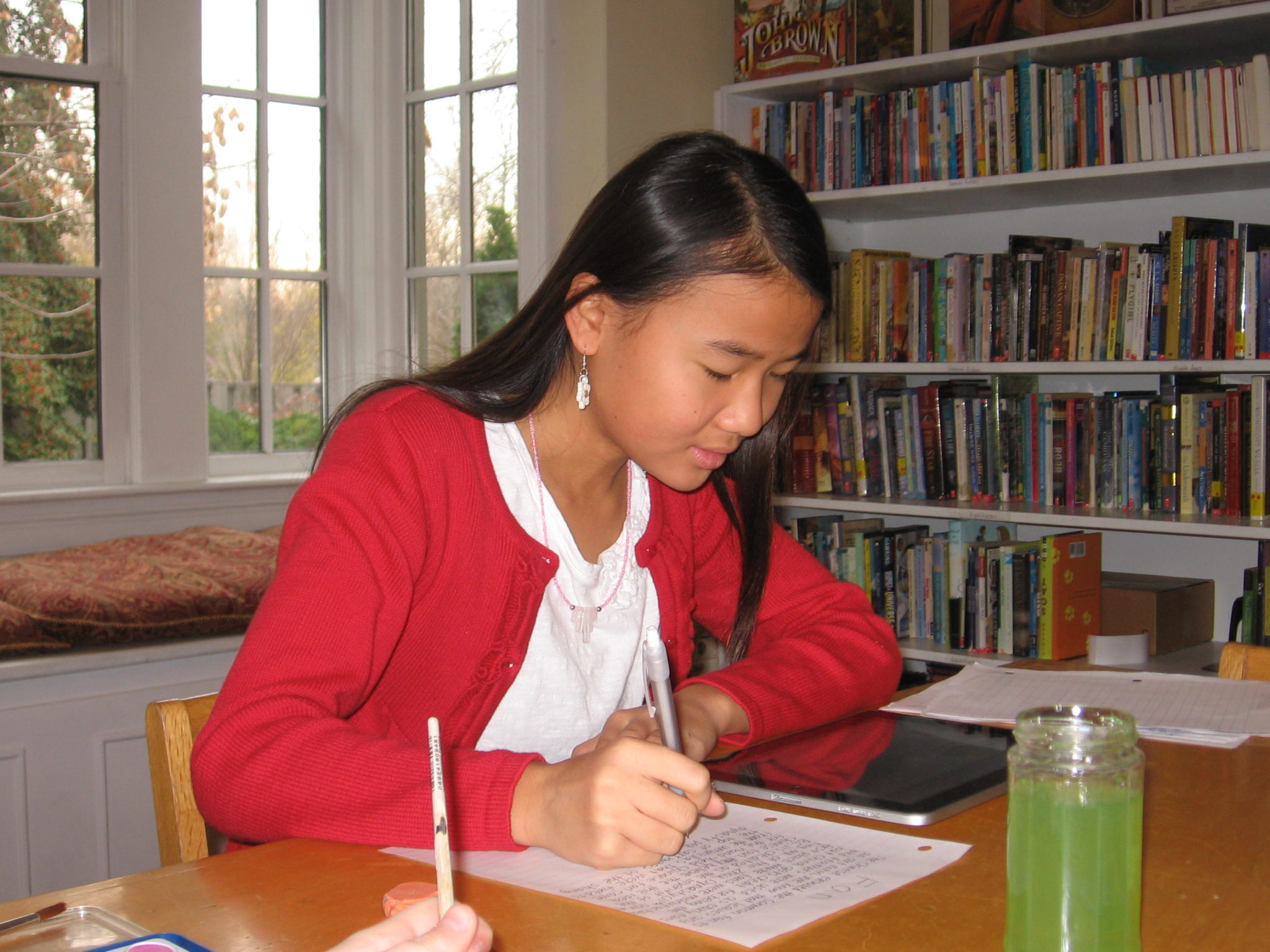
- Effective written and verbal expression is emphasized as students learn to make themselves understood and get to know others
- Language studies include: Sentence analysis, novel study, spelling and grammar exercises, daily reading and writing workshops, experience with different writing genres, and public speaking requirements are all part of the curriculum.
- Additional curriculum highlights include a weekly newsletter published by sixth-year students and a semester-long Independent Research Project (IRP) that teaches research, note-taking, expository writing, and presentation skills
- Through rigorous research, students refine their critical thinking capacities.
- Upper Elementary students trace the story of the evolution of humans
- Students compare and contrast world civilizations, and they begin thematic studies of American history.
- The interdisciplinary, research-based thrust of the curriculum culminates in the sixth year as students undertake a yearlong research project.
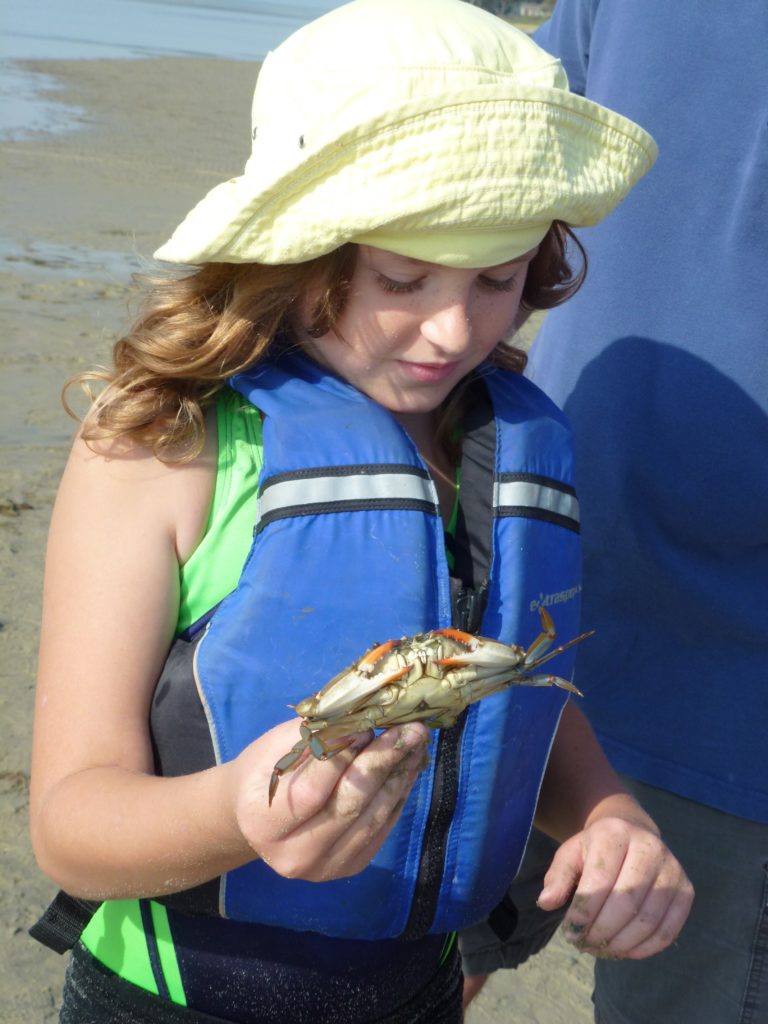
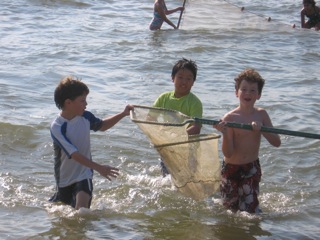
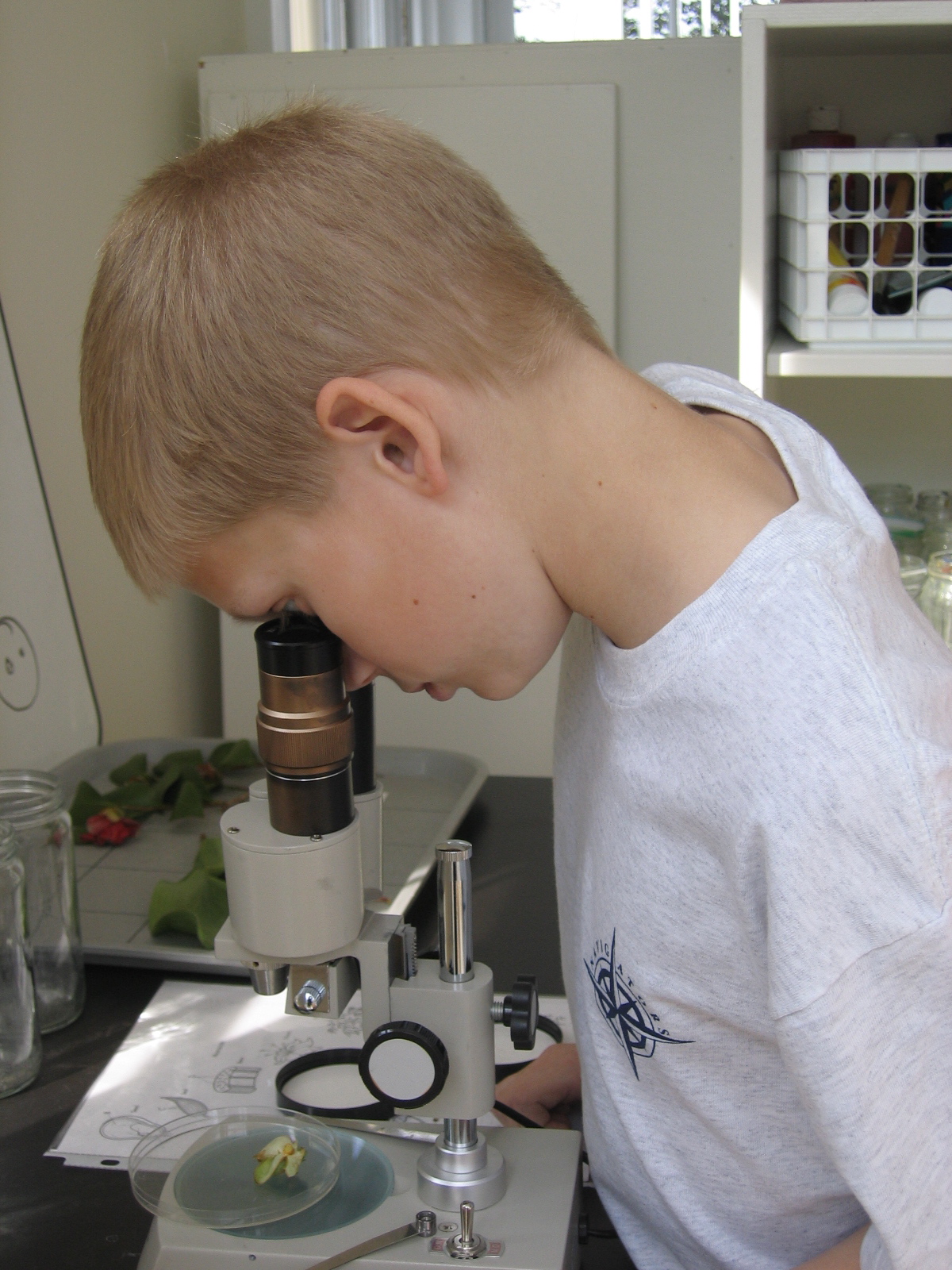
- Our science program brings students into direct contact with the central work of scientists: our students identify, question, explore, and conclude.
- Students in the Upper Elementary Program study the Sciences as part of a broadly focused exploration. Comprehensive, thematic studies of “Water,” “Fire,” and “Earth/Air” comprise the three-year, rotating core of students’ studies in life science, physical science, and earth/space science.
- The thematic approach encourages students to make connections across the sciences; it generates profound curiosity; and it allows them to design investigative projects that express their interests and their styles of learning.
- Builds on the child’s natural interest in peer relationships and in the world around him
- Students share responsibility for maintaining their school environment, from weeding outdoor gardens to caring for classroom animals to planning special projects.
- Lessons in assertive communication and opportunities to work with one another allow students to become effective problem solvers and team members
- The “Going Out” program encourages students to plan small field studies to support individual or small-group research projects
- Special lessons in music, physical education, Spanish, Latin and art are offered in the afternoons.
Upper Elementary Program Hours
Full Day – 8:30 a.m. – 3:15 p.m.
*Before-care – 7:30 -8:30 a.m.
*After-care – 3 – 5:30 p.m.
*Available at Longhill Road campus. Shuttle bus available.
Faculty
- Lisa Blackford, UE Lead Teacher, Art
- Molly Anderson, UE Assistant
- Wayne Hill – Music
- Cameron Slaby – Spanish
- Janet Coulter – Latin
- Bill Hansell – Tai Chi
- Yuria Joo – Intern Teacher
Lunch/Snacks
Students bring their own nutritious lunch. Morning and afternoon snacks are provided.
Volunteer Classroom Liaisons
Melissa Shelton
The WMS Middle School provides the ideal learning environment for adolescents fostering intellectual, physical, and emotional development (the whole person) and allowing them to pursue their interests while achieving academic and leadership excellence. The Montessori process encourages lifelong learning and an approach to every experience as an opportunity to acquire knowledge, continue personal growth, and positively impact the environment.
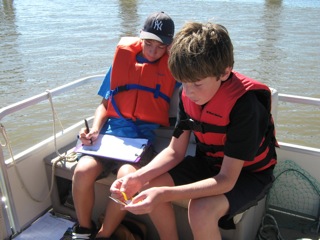
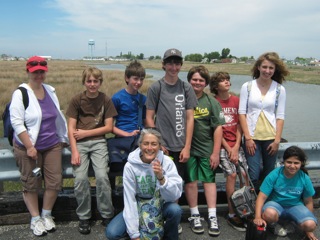
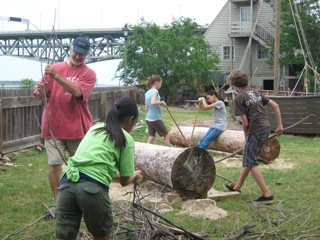
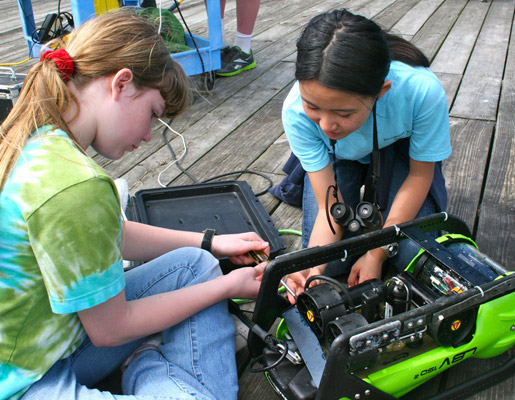
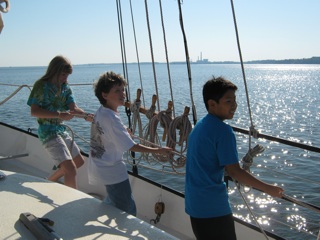
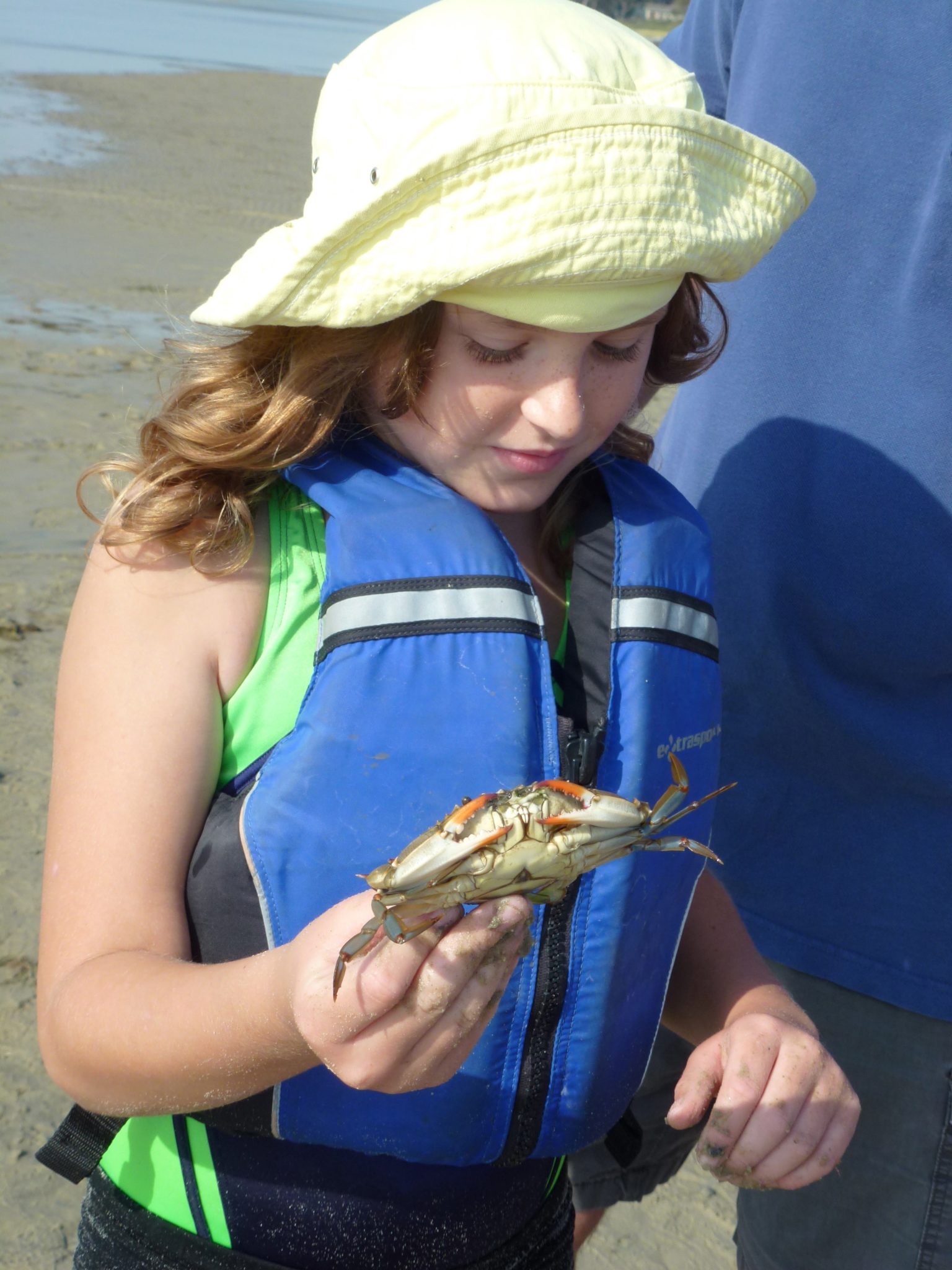
The Middle School is housed at 800 Richmond Road and takes advantage of the tremendous resources that both the Watermen’s Museum and York River State Park have to offer. Distinctive features of the program include access to science labs and research-based facilities; partnership with the Waterman’s Museum and other community resources; aquaculture service projects; oyster bed cultivation; and boat building.
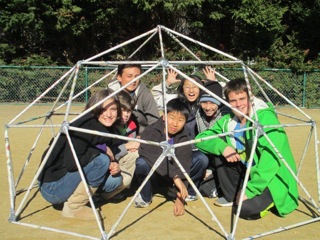
The curriculum is designed to equip students with skills, concepts, and habits of mind needed to succeed in high school advanced placement courses and college. All courses of study are hands-on opportunities to engage in meaningful work. Ninth grade students earn high school credit for all courses taken. Courses marked with an * indicate a high school credit course.
- Students use higher-order thinking skills to solve problems in relation to a variety of challenges
- Students explore in depth numbers, properties, simple equations, higher measurement, computer calculation and graphics, geometric proofs, and algebraic equations.
- Math is taught through both traditional and hands-on direct instruction, daily independent practice, and individual and group practice in solving real-life problems such as building oyster floats, designing and building boats, constructing raised gardens and building and maintaining greenhouse structures, analyzing statistics in economics and civics.
- Courses include: Pre-Algebra, Algebra* and Geometry*
- Through building a strong foundation in and understanding of the English language, the student develops confidence in self-expression and reason and is prepared for the demands of higher education
- The Language Arts curriculum utilizes Socratic seminar discussion, oral presentation, debates, drama, video, and photography
- Daily lessons include context grammar, journaling, editing, vocabulary, and literary techniques
- A rigorous writing program that includes essays, persuasive writing, research papers, journalism, analytical writing and creative writing
- Literature studies integrate with history and science themes and center around novels, short stories, poetry and biographies with focus on literary devices and the elements of writing (components of style, genre, characterization, theme, etc.)
- Physical and Life Sciences are taught in alternating years in 7th and 8th Grades.
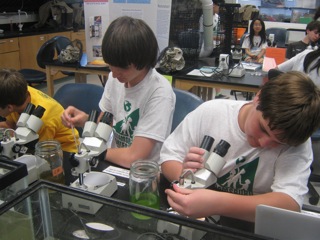
- Hands-on scientific inquiry activities with an emphasis in critical thinking and data analysis lead students to understanding of subject matter
- As part of an integrated curriculum, writing assignments support the need for communication in science
- Students embark on a journey to learn more about the Chesapeake Bay, the largest estuary in North America, and to teach what they learn to others
- Emphasis is placed on stewardship to the environment as students are encouraged to do community service work that promotes the health of the Bay
- Partnering with Chesapeake Bay Foundation and Oyster Reef Keepers of Virginia, students grow oysters to be placed on protected reefs
- To balance an understanding of Earth’s water force, we also study the land.
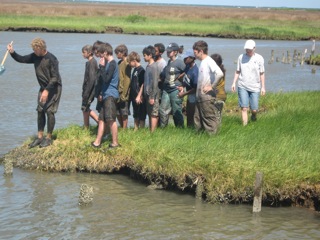
- Land Lab experiences include colonial and native Virginia gardening at the Watermen’s Museum and participation in a NASA-sponsored GLOBE project at our Riverview Land Lab.
- Historical study includes the Americas as well as other world civilizations using an evolving timeline and a focus on large questions and patterns in history
- Students use geographic themes of location, human-environment interaction, movement, and region to integrate ideas from history and geography
- Primary readings from different historical periods, as well as novel studies, are included
- Students learn about their government through practical experiences, such as field trips, community involvement, and simulations
- Lessons include vocabulary, oral language, listening comprehension, and cultural studies
- Spanish 1 and 2 will be taught either in one- or two-year cycles according to each student’s goals and abilities
Middle School Program Hours
Full Day – 8:30 a.m. – 3:15 p.m.
Faculty
- Laura Newton, Director, Science and Aquaculture
- Brandy Bergenstock – Art, Technology
- Corinna Ferro – Humanities Lead
- Wayne Hill – Guitar
- Ann Mease – Math
- Amanda Sale – Math
- Cameron Slaby – Spanish
Lunch/Snacks
Students bring their own nutritious lunch. Morning and afternoon snacks are provided.
Volunteer Classroom Liaisons
Karen Doherty
Students in the Children’s House and Elementary programs can take advantage of our After-School program. With activities ranging from crafts and games to talent shows and free outdoor play, the After-School program is a bridge between school and home where students can relax, learn and have fun – all within a nurturing Montessori environment.
Spaces are available to WMS families on a first-come, first-serve basis.
Middle School Program Hours
After School – 3:00 a.m. – 5:30 p.m.
Faculty
Lunch/Snacks
A healthy snack is provided.